Although I have yet to choose a certain path with which I will shape my career, I have narrowed it down to becoming a professional in the field of Psychology or a professional in graphic design. Both paths, although dramatically different, will acquire from me the same tools of success to get there. Internships, mentors, work experience, and study of the craft are all tools that are very necessary during and after graduating college. Internships will give me work experience in the field and connections. Mentors will be excellent advisors because they have been in my shoes once and know the ins and outs of the profession. Studying the craft will allow me to become a true professional in the path I choose to pursue. Another goal I have is to work hard in order to relive my father’s tired hands. I would like to work so he can finally relax after almost 30 years of hard manual labor. My parents have both worked very hard to give my siblings and me a better life. I plan to pay them back for their hard work and loving hearts with my own hard work and my own loving heart. These two goals will only be attainable with not only hard work but smart work. The tools of internships, mentors and work experience will allow me to settle into a career and become the professional I see myself becoming.
Thursday, January 24, 2013

Tuesday, January 22, 2013

Lit Terms 6-25
6. Antithesis: a balancing of one term against another for emphasis or stylistic effectiveness.

7. Aphorism: a terse, pointed statement expressing some wise or clever observation about life.

8. Apologia: a defense or justification for doctrine, piece of writing, cause, or action; also apology.

9. Apostrophe: a figure of speech in which an absent or dead perosn, an abstract quality, or something inanimate or nonhuman is addressed directly.
10. Argument(action): the process of convincing a reader by proving either the truth or the falsity of an idea or proposition; also, the thesis or proposition itself.

picture credit to Ming.
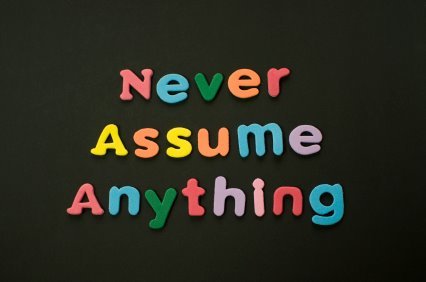
11. Assumption: the act of supposing, or taking for granted that a thing is truth.
12. Audience: the intended listener or listeners.

13. Characterization: the means by which a writer reveals a character's personality.

14. Chiasmus: a reversal in the order off words so that the second half of a statement balances the first half in inverted word order.

15. Circumlocution: a roundabout or evasive speech or writing, in which many words are used but a few would have served.

16. Classicism: art, literature, and music reflecting the principles of ancient Greece and Rome; tradition, reason, clarity, order, and balance.

17. Cliché: a phrase or situation overused within society.


19. Colloquialism: folksy speech, slang words or phrases usually used in informal conversation.
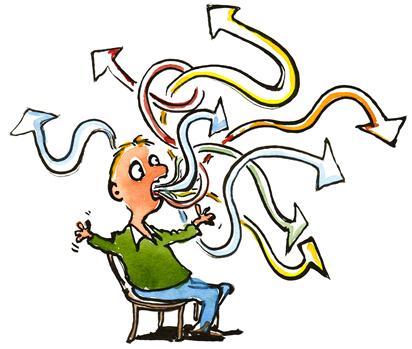

21. Conflict: struggle or problem in a story causing tension.

22. Connotation: implicit meaning, going beyond dictionary definition.

23. Contrast: a rhetorical device by which one element(idea or object) is thrown into opposition to another for the sake of emphasis or clarity.

24. Denotation: plain dictionary definition.

25. Denouement(pronounced day-new-mahn): loose ends tied up in a story after the climax, closure, conclusion.

Friday, January 18, 2013
Poetry Analysis
1. " The Happy Couple" (Death Poem)- Alysia Harris
This poem is about two lovers in the after life and the purpose is to describe a sort of heaven.
The speaker is very passionate when she speaks and her tone increasingly becomes more forceful until she reaches the climax of the poem and then quiets down.
2. Our Whole Life by Adrienne Rich
Our whole life a translation
the permissible fibs
and now a knot of lies
eating at itself to get undone
Words bitten thru words
meanings burnt-off like paint
under the blowtorch
All those dead letters
rendered into the oppressor's language
Trying to tell the doctor where it hurts
like the Algerian
who waled form his village, burning
his whole body a could of pain
and there are no words for this
except himself
The authors tone is very dark and meaningful. She incorrectly spells "through" to maybe shorten the sentence in order to make it a little bit more snappy and quick. The theme is in my eyes that our life is a lie, not what it seems, or very controlled and short.
3. The Second Coming
BY WILLIAM BUTLER YEATS
Turning and turning in the widening gyre
The falcon cannot hear the falconer;
Things fall apart; the centre cannot hold;
Mere anarchy is loosed upon the world,
The blood-dimmed tide is loosed, and everywhere
The ceremony of innocence is drowned;
The best lack all conviction, while the worst
Are full of passionate intensity.
Surely some revelation is at hand;
Surely the Second Coming is at hand.
The Second Coming! Hardly are those words out
When a vast image out of Spiritus Mundi
Troubles my sight: somewhere in sands of the desert
A shape with lion body and the head of a man,
A gaze blank and pitiless as the sun,
Is moving its slow thighs, while all about it
Reel shadows of the indignant desert birds.
The darkness drops again; but now I know
That twenty centuries of stony sleep
Were vexed to nightmare by a rocking cradle,
And what rough beast, its hour come round at last,
Slouches towards Bethlehem to be born?
This poem's tone is dark and intense. The speaker paints a picture in the readers mind with every line because of his use of imagery metaphors and similes. He does not add grammatical errors but he does add a question mark to the end, to leave the reader with a question.
This poem is about a father-son relationship and how the father does so much but the son is ungrateful and unknowing of all the work. The speaker talks about the past and this allows him to add in what he knows now about his father and it shows that now he is grateful for the things his father did for him.
The speaker is very passionate when she speaks and her tone increasingly becomes more forceful until she reaches the climax of the poem and then quiets down.
2. Our Whole Life by Adrienne Rich
Our whole life a translation
the permissible fibs
and now a knot of lies
eating at itself to get undone
Words bitten thru words
meanings burnt-off like paint
under the blowtorch
All those dead letters
rendered into the oppressor's language
Trying to tell the doctor where it hurts
like the Algerian
who waled form his village, burning
his whole body a could of pain
and there are no words for this
except himself
The authors tone is very dark and meaningful. She incorrectly spells "through" to maybe shorten the sentence in order to make it a little bit more snappy and quick. The theme is in my eyes that our life is a lie, not what it seems, or very controlled and short.
3. The Second Coming
BY WILLIAM BUTLER YEATS
Turning and turning in the widening gyre
The falcon cannot hear the falconer;
Things fall apart; the centre cannot hold;
Mere anarchy is loosed upon the world,
The blood-dimmed tide is loosed, and everywhere
The ceremony of innocence is drowned;
The best lack all conviction, while the worst
Are full of passionate intensity.
Surely some revelation is at hand;
Surely the Second Coming is at hand.
The Second Coming! Hardly are those words out
When a vast image out of Spiritus Mundi
Troubles my sight: somewhere in sands of the desert
A shape with lion body and the head of a man,
A gaze blank and pitiless as the sun,
Is moving its slow thighs, while all about it
Reel shadows of the indignant desert birds.
The darkness drops again; but now I know
That twenty centuries of stony sleep
Were vexed to nightmare by a rocking cradle,
And what rough beast, its hour come round at last,
Slouches towards Bethlehem to be born?
This poem's tone is dark and intense. The speaker paints a picture in the readers mind with every line because of his use of imagery metaphors and similes. He does not add grammatical errors but he does add a question mark to the end, to leave the reader with a question.
4.Do Not Go Gentle into That Good Night
BY DYLAN THOMAS
Do not go gentle into that good night,
Old age should burn and rave at close of day;
Rage, rage against the dying of the light.
Though wise men at their end know dark is right,
Because their words had forked no lightning they
Do not go gentle into that good night.
Good men, the last wave by, crying how bright
Their frail deeds might have danced in a green bay,
Rage, rage against the dying of the light.
Wild men who caught and sang the sun in flight,
And learn, too late, they grieved it on its way,
Do not go gentle into that good night.
Grave men, near death, who see with blinding sight
Blind eyes could blaze like meteors and be gay,
Rage, rage against the dying of the light.
And you, my father, there on the sad height,
Curse, bless, me now with your fierce tears, I pray,
Do not go gentle into that good night.
Rage, rage against the dying of the light.
The theme of this poem is death. The speaker means to teach the reader to keep fighting until the end. The tone is sad and depressed.
5. Those Winter Sundays
BY ROBERT HAYDEN
Sundays too my father got up early
and put his clothes on in the blueblack cold,
then with cracked hands that ached
from labor in the weekday weather made
banked fires blaze. No one ever thanked him.
I’d wake and hear the cold splintering, breaking.
When the rooms were warm, he’d call,
and slowly I would rise and dress,
fearing the chronic angers of that house,
Speaking indifferently to him,
who had driven out the cold
and polished my good shoes as well.
What did I know, what did I know
of love’s austere and lonely offices?
This poem is about a father-son relationship and how the father does so much but the son is ungrateful and unknowing of all the work. The speaker talks about the past and this allows him to add in what he knows now about his father and it shows that now he is grateful for the things his father did for him.
Wednesday, January 16, 2013
Lit Terms 1-5
1. Allegory
2. Alliteration

3. Allusion
 Yoda in the movie E.T.
4. Ambiguity

Old lady or young lady?
5. Anachronism

2. Alliteration

3. Allusion

4. Ambiguity

Old lady or young lady?
5. Anachronism
Friday, January 11, 2013
AP PREP POST 1: SIDDHARTHA
1. According to E.M. Forster, a "round" character is dynamic and changing, and may even be contradictory. A "flat" character is familiar and unchanging. Choose a supporting or secondary character from Siddhartha and write a well-organized and textually supported post in which you show the character to be round or flat.
2.A foil is a character in literature who highlights certain traits of the main character by contrasting them. For example, a coward helps to show the hero's bravery in a stronger light. Choose either Govinda or Kamala to write a well-developed and textually supported post in which you show how he or she serves in the novel as a foil for Siddhartha.
Avoid plot summary.
I found these questions here http://laneyaplit.blogspot.com/?m=1
1) Siddhartha has an epiphany moment and is reborn again. He has been changed into a dynamic character as of that moment and goes on to grow in his different path.
2) Govinda serves as a foil for Siddhartha because Siddhartha chose a different path, maybe a better path than Govinda. In the passage, Govinda is said to be part of a huge group where as Siddhartha is very alone but through this loneliness, he finds who he is.
3)The title being simple Siddhartha is just as Siddhartha is, just himself. It's simple yet so dynamic because of the book and its themes.
4) I don't remember the characters and therefore I cannot answer the question.
5) I don't remember this either. I need to know more about the themes of the book in order to go more in depth.
2.A foil is a character in literature who highlights certain traits of the main character by contrasting them. For example, a coward helps to show the hero's bravery in a stronger light. Choose either Govinda or Kamala to write a well-developed and textually supported post in which you show how he or she serves in the novel as a foil for Siddhartha.
Avoid plot summary.
I found these questions here http://laneyaplit.blogspot.com/?m=1
3)Discuss the significance of the title Siddhartha to the theme of the novel.
4)Choose a character other than Siddhartha, and discuss how the character supports the theme of Hesse's novel. (Characters to choose from are Govinda, Vasudeva, Kamala, Kamaswami, the Son, or the River)
5)The parable The Precious Present shares a common idea or theme with Siddhartharelating to the
past, present and future. What is that idea? What events in Siddhartha show this idea?
4)Choose a character other than Siddhartha, and discuss how the character supports the theme of Hesse's novel. (Characters to choose from are Govinda, Vasudeva, Kamala, Kamaswami, the Son, or the River)
5)The parable The Precious Present shares a common idea or theme with Siddhartharelating to the
past, present and future. What is that idea? What events in Siddhartha show this idea?
I found these here
1) Siddhartha has an epiphany moment and is reborn again. He has been changed into a dynamic character as of that moment and goes on to grow in his different path.
2) Govinda serves as a foil for Siddhartha because Siddhartha chose a different path, maybe a better path than Govinda. In the passage, Govinda is said to be part of a huge group where as Siddhartha is very alone but through this loneliness, he finds who he is.
3)The title being simple Siddhartha is just as Siddhartha is, just himself. It's simple yet so dynamic because of the book and its themes.
4) I don't remember the characters and therefore I cannot answer the question.
5) I don't remember this either. I need to know more about the themes of the book in order to go more in depth.
Wednesday, January 9, 2013
Subscribe to:
Posts (Atom)